
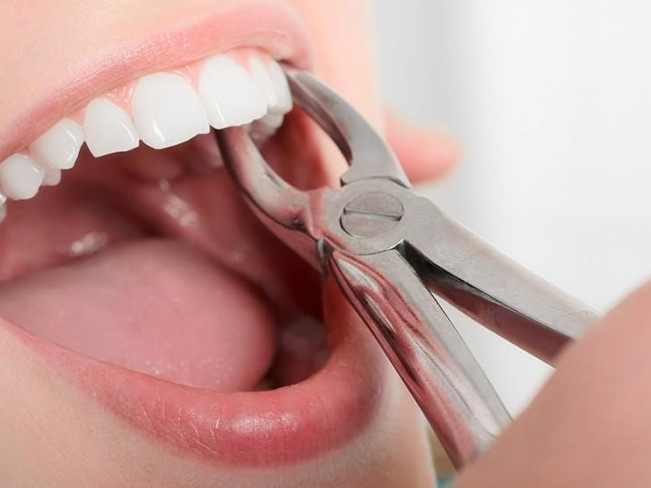
Tooth Extractions
At SmileVerse Dental Clinic in Friendswood, TX, Dr. Greiss always begins from a philosophy of preservation — the goal is to save every natural tooth possible. However, there are situations in which extraction is the most appropriate and compassionate course of action, and when that time comes, Dr. Greiss performs the procedure with a level of care, precision, and gentleness that makes the experience far more manageable than most patients anticipate. A tooth extraction at SmileVerse is never a rushed procedure — it is a carefully planned clinical event designed to protect your overall oral health and set the stage for the best possible long-term outcome.
There are several clinical situations in which extraction becomes necessary. Severe decay that has destroyed so much of the tooth that neither a filling nor a crown can restore it adequately is the most common reason. Advanced periodontal disease that has eroded the bone supporting a tooth to the point where the tooth is mobile and cannot be stabilized may also require extraction. Fractured teeth — those with cracks that extend below the gum line or into the root — often cannot be saved regardless of the restorative effort applied. Impacted wisdom teeth that are causing pain, crowding, infection, or damage to adjacent teeth are among the most frequently extracted teeth overall. And in some orthodontic cases, strategic extractions create the space needed for remaining teeth to align properly.
Before the extraction, Dr. Greiss will review your medical history, current medications, and any relevant imaging — including CBCT when the anatomy warrants it — to ensure that the procedure is as safe and predictable as possible. Local anesthesia is administered to completely numb the tooth and surrounding tissues, and Dr. Greiss will confirm that you are comfortable before proceeding. The extraction itself involves loosening the tooth from its socket using specialized instruments, then removing it with a controlled, rocking motion that minimizes trauma to the surrounding bone and tissue. Surgical extractions — for teeth that are impacted, broken beneath the gum line, or have curved or fused roots — may require a small incision and the removal of a small amount of bone, but are performed with the same care and precision as routine extractions.
Post-extraction care is a critical part of the process, and Dr. Greiss will provide you with detailed written and verbal instructions before you leave our office. Keeping the extraction site clean, avoiding smoking, straws, and vigorous rinsing in the first 24 hours, eating soft foods, and taking any prescribed or recommended medications as directed are all essential for a smooth, uncomplicated recovery. Most patients experience only mild discomfort that resolves within a few days.
Equally important is what happens after the extraction. A missing tooth — even one that is not visible when you smile — can have significant effects on neighboring teeth, bite function, and jawbone health over time. Dr. Greiss will discuss tooth replacement options at your extraction appointment so that you can begin planning the next step in restoring your complete, healthy smile.
What to Expect at SmileVerse
✦ Pre-extraction consultation: Dr. Greiss reviews your records, explains the procedure, and confirms that extraction is the most appropriate course of treatment.
✦ Local anesthesia: The tooth and surrounding tissue are thoroughly numbed. Dr. Greiss will not proceed until you confirm you are completely comfortable.
✦ Gentle extraction: The tooth is carefully loosened and removed using controlled, precise technique designed to minimize trauma to surrounding structures.
✦ Socket care: The extraction site is cleaned and, if appropriate, a graft material may be placed to preserve bone volume for future implant placement.
✦ Recovery instructions: You will receive detailed written instructions for home care, along with Dr. Greiss’s direct contact information for any post-procedure questions.
Frequently Asked Questions
Q: Will the extraction hurt?
A: With local anesthesia, you should feel pressure and movement but no pain during the procedure. Any soreness after the anesthesia wears off is typically mild and manageable with over-the-counter pain relievers.
Q: How long is the recovery?
A: Most patients feel back to normal within 3–5 days for a simple extraction, and within 1–2 weeks for a surgical extraction. Following your aftercare instructions closely significantly speeds recovery.
Q: What is dry socket and how do I avoid it?
A: Dry socket occurs when the blood clot that forms in the extraction site is dislodged before healing is complete, exposing the underlying bone. It is painful but treatable. Avoiding smoking, straws, and forceful rinsing for 48–72 hours after extraction is the most effective prevention.
Q: Do I need to replace the extracted tooth?
A: In most cases, yes. Even teeth that are not visible when you smile play important roles in maintaining bite function, preventing neighboring teeth from shifting, and preserving jawbone density. Dr. Greiss will discuss implants, bridges, and other replacement options.
Q: Can I drive myself home after an extraction?
A: If you received local anesthesia only, yes — driving is safe. If sedation was used, you will need someone to drive you. Our team will confirm this with you in advance.
Ready to get started? Call SmileVerse at (281) 482-3331 or book online at smileverseclinic.com. We proudly serve Friendswood, League City, Pearland, Clear Lake, and the greater Houston area.