
Root Canal Therapy
Few words in dentistry generate more anxiety than “root canal” — and yet the reality of modern root canal therapy is a far cry from its reputation. At SmileVerse Dental Clinic in Friendswood, TX, Dr. Greiss performs root canal therapy with the precision of someone who has completed these procedures many times and the compassion of someone who genuinely understands what it means to be in a dental chair when you are in pain and worried. The goal of root canal therapy is not to cause discomfort — it is to eliminate it. And for the vast majority of patients who come to us dreading the procedure, the experience is a profound relief.
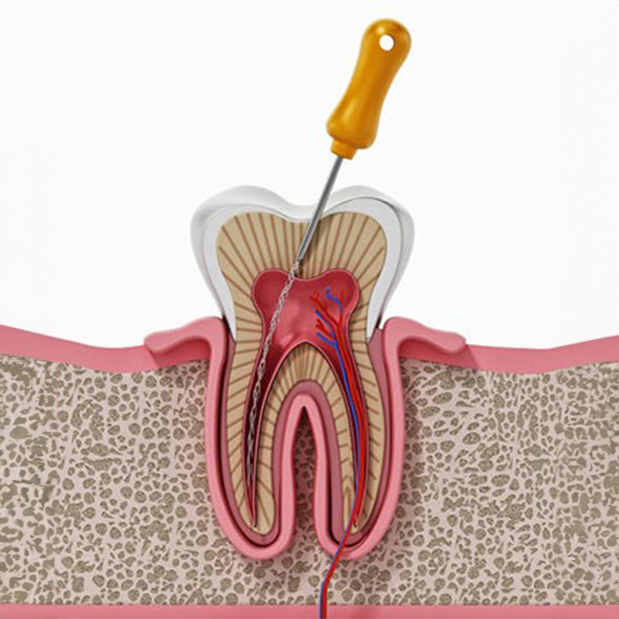
Root canal therapy becomes necessary when the soft tissue inside a tooth — the pulp — becomes infected or severely inflamed. The pulp is the living inner chamber of the tooth containing nerves, blood vessels, and connective tissue. When decay reaches deep enough into the tooth to reach the pulp, or when a tooth suffers trauma, a crack, or repeated dental procedures, bacteria can invade the pulp and cause an infection that the body cannot resolve on its own. Symptoms often include persistent throbbing pain, sensitivity to hot or cold that lingers long after the stimulus is removed, pain when biting down, swelling around the tooth, or a visible abscess on the gum. Occasionally, a tooth that needs a root canal causes no symptoms at all — which is why regular exams and X-rays matter so much.
The procedure itself begins with Dr. Greiss administering local anesthesia to ensure that you feel nothing beyond pressure throughout the entire treatment. Once you are comfortable, a small opening is created in the top of the tooth, and the infected or damaged pulp tissue is carefully removed from the canals inside the root using specialized instruments. The canals are then cleaned, shaped, and disinfected with precision — a process that requires patience and skill, particularly in teeth with curved or multiple canals. Once all infected tissue has been removed and the canals are thoroughly cleaned, they are filled with a biocompatible material called gutta-percha, which seals the space and prevents future bacterial entry. A temporary or permanent filling is then placed to close the access opening.
In most cases, a tooth that has received root canal therapy will also need a dental crown to protect it from future fracture. This is because the removal of the pulp, combined with the original decay or damage that necessitated the procedure, can leave the tooth more brittle than a healthy tooth. A crown restores the tooth’s full strength and function, allowing it to serve you for many more years — sometimes a lifetime. Dr. Greiss will advise you on the appropriate timing and discuss all your restoration options.
Root canal therapy saves teeth that would otherwise need to be extracted — and keeping your natural tooth is almost always the best possible outcome. No prosthetic tooth, however well crafted, fully replicates the function and feel of your own. If you are experiencing tooth pain or have been told you may need a root canal, do not delay. The sooner the infection is treated, the simpler and more predictable the procedure becomes.
What to Expect at SmileVerse
✦ Consultation and diagnosis: Dr. Greiss will examine your tooth, review X-rays or CBCT imaging if needed, and confirm that root canal therapy is the appropriate treatment.
✦ Local anesthesia: The area is thoroughly numbed before any instruments are used. Most patients are surprised by how comfortable the procedure feels.
✦ Pulp removal and canal cleaning: Infected tissue is removed from the root canals, which are then shaped and disinfected with precision instruments.
✦ Sealing the canals: The cleaned canals are filled with gutta-percha and sealed to prevent reinfection.
✦ Restoration planning: Dr. Greiss will discuss the appropriate crown or filling to protect and restore the treated tooth.
Frequently Asked Questions
Q: Will a root canal hurt?
A: With modern anesthesia and technique, root canal therapy should be no more uncomfortable than getting a filling. Most patients are surprised by how painless it is. Some soreness in the days following is normal and manageable with over-the-counter pain relievers.
Q: How many appointments does root canal therapy take?
A: Most root canals at SmileVerse are completed in one or two appointments, depending on the complexity of the tooth’s anatomy and the severity of the infection.
Q: What happens if I skip the root canal?
A: Without treatment, the infection will continue to spread, potentially causing a dental abscess, bone loss, and the eventual loss of the tooth. In rare cases, untreated dental infections can spread to other areas of the head and neck.
Q: Is it better to pull the tooth than get a root canal?
A: In almost all cases, saving your natural tooth is the better option. Root canal therapy followed by a crown is more cost-effective and functionally superior over the long term than extraction followed by an implant or bridge.
Q: How long does a root canal-treated tooth last?
A: With a proper crown and good oral hygiene, a root canal-treated tooth can last a lifetime. Dr. Greiss will advise on the best restoration to maximize the tooth’s longevity.
Ready to get started? Call SmileVerse at (281) 482-3331 or book online at smileverseclinic.com. We proudly serve Friendswood, League City, Pearland, Clear Lake, and the greater Houston area.