
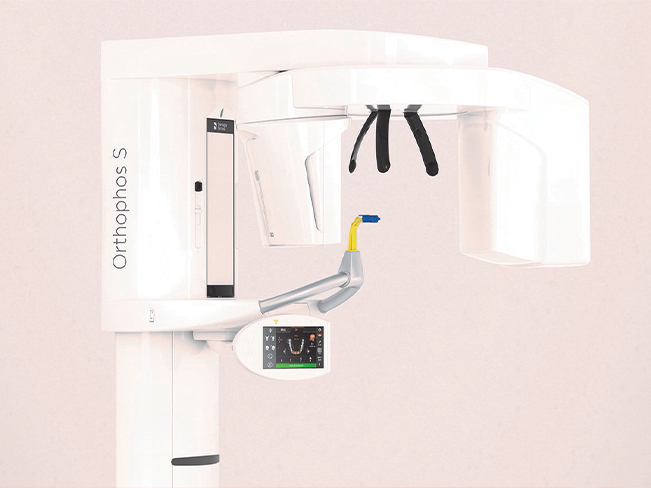
CBCT (3D Imaging)
At
SmileVerse Dental Clinic, we have invested in some of the most advanced
diagnostic technology available in modern dentistry — and our Cone Beam
Computed Tomography (CBCT) scanner represents the highest level of that
investment. CBCT, often called 3D dental imaging, is a specialized form of
X-ray technology that captures a complete three-dimensional picture of your
teeth, jaw, bone, nerves, sinuses, and soft tissue structures in a single,
comfortable scan. For Dr. Greiss, having this level of detail is not a luxury —
it is a clinical necessity for the complex, high-precision procedures he
performs, and it directly translates into better outcomes and fewer surprises
for every patient.
Traditional
two-dimensional X-rays are excellent for many diagnostic purposes, but they
have an inherent limitation: they compress a three-dimensional structure into a
flat image, which means certain conditions can be hidden, obscured, or
misinterpreted. CBCT eliminates this limitation entirely. With a
three-dimensional image, Dr. Greiss can view every structure in your jaw from
any angle, measure bone volume and density with surgical precision, trace the
exact path of nerves before placing implants, detect cysts or infections that
standard X-rays miss, and evaluate the complexity of an extraction before a
single instrument touches your tooth. This level of information makes every
treatment safer and more predictable.
CBCT
imaging is particularly invaluable for dental implant planning. Before placing
an implant, Dr. Greiss uses the 3D scan to identify the precise location and
diameter of your inferior alveolar nerve, measure the exact amount of available
bone, determine the ideal implant angle and depth, and create a surgical guide
for placement. Patients who have been told they might not have enough bone for
implants are often pleasantly surprised when a CBCT scan reveals sufficient
bone volume that was not visible on a flat X-ray. This technology has opened
doors for patients who were told their implant options were limited.
Beyond
implants, CBCT is used at SmileVerse for All-on-X treatment planning,
evaluation of complex root canal anatomy before therapy, assessment of impacted
teeth, evaluation of jaw joint disorders (TMJ), and orthodontic treatment
planning. In each of these situations, the additional information provided by a
3D scan leads to more accurate diagnoses, more targeted treatments, and
significantly reduced treatment times. Many patients have had conditions
identified on CBCT that had been missed for years on conventional imaging — and
catching those conditions earlier always means simpler, less expensive
treatment.
The
scan itself takes under 60 seconds and requires no preparation on your part
beyond removing any metal objects like earrings or glasses. You will sit or
stand in a comfortable position as the scanner rotates gently around your head,
capturing hundreds of images that are instantly compiled into a detailed
three-dimensional model. There is no discomfort, no injections, and no lengthy
recovery. Dr. Greiss will review the images with you at your appointment and
explain exactly what they reveal in terms that are easy to understand. At
SmileVerse, we believe that informed patients make better decisions — and CBCT
imaging is one of the most powerful tools we have for keeping you fully
informed.
What to Expect at SmileVerse
✦ Preparation: Remove earrings, glasses, and any removable dental appliances. No other preparation is required.
✦ Quick, comfortable scan: The CBCT machine rotates around your head in under 60 seconds. You will feel nothing — there is no discomfort or claustrophobia involved.
✦ Immediate imaging: The three-dimensional images are compiled instantly and appear on-screen for review.
✦ Detailed review with Dr. Greiss: Dr. Greiss walks you through the images, highlighting key findings and explaining their clinical significance in plain language.
✦ Treatment planning: If further treatment is needed, the 3D data informs a precise, personalized treatment plan that minimizes uncertainty and maximizes outcomes.
Frequently Asked Questions
Q: Is CBCT radiation safe?
A: Yes. While CBCT does use a small amount of radiation, the dose is carefully controlled and significantly lower than a medical CT scan. Dr. Greiss only orders CBCT when the clinical benefit clearly outweighs the minimal exposure risk.
Q: Is CBCT covered by insurance?
A: Coverage varies by plan and clinical indication. Our team will verify your benefits in advance and help you understand any out-of-pocket cost before the scan is performed.
Q: Do I need a CBCT scan before every procedure?
A: No. CBCT is ordered selectively for cases where three-dimensional information is clinically necessary — primarily implants, All-on-X, complex extractions, and certain diagnostic evaluations.
Q: How long does the scan take?
A: The actual scan takes less than 60 seconds. Your entire CBCT appointment, including preparation and image review with Dr. Greiss, typically takes 30–45 minutes.
Q: What conditions can CBCT detect that regular X-rays miss?
A: Cysts and tumors in early stages, nerve positions relative to tooth roots, bone density and volume, root fractures, early signs of jaw joint changes, and sinus pathology are among the conditions CBCT reveals that flat X-rays often cannot.
Ready to get started? Call SmileVerse at (281) 482-3331 or book online at smileverseclinic.com. We proudly serve Friendswood, League City, Pearland, Clear Lake, and the greater Houston area.